Why the Brain Loves Patterns
Why can you hum the next lyric in a song before it comes on? Why can you instantly spot your friend’s face in a crowd full of people?
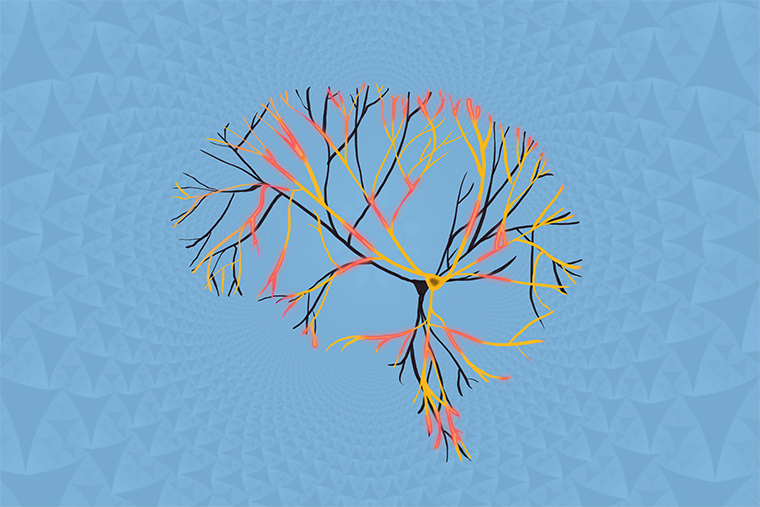
Why can you hum the next lyric in a song before it comes on? Why can you instantly spot your friend’s face in a crowd full of people? These are all examples of the brain using patterns to assist in everyday life. The human brain actively searches for patterns because it is built on the basis of prediction. If you’re interested in another example of the brain using patterns, I discussed how the brain forms first impressions of people here. Pattern recognition is built into our neural circuitry, shaping how we perceive, learn, survive, and experience joy.
Patterns in Everyday Life
Throughout the day, the brain encounters countless patterns in different forms. In music, rhythms and melodies are satisfying because the brain anticipates what comes next. In language, finishing sentences and predicting words in conversation are both examples of pattern use. In social settings, the brain reads facial expressions and tone of voice based on patterns of previous behavior. People also often find comfort in predictability, habits, and routines.
All of these connect to the brain’s reward pathway, a complex network of interconnected brain structures that plays a crucial role in processing and reinforcing pleasurable experiences.
The Neuroscience of Pattern Recognition
Pattern recognition happens because of how the brain’s wiring strengthens with experience. One of the core principles of neuroscience, known as Hebb’s rule, states that “neurons that fire together, wire together.” This means that when certain neurons repeatedly activate in response to the same stimulus, their connections strengthen, making it easier to detect and respond to similar patterns in the future.
Several brain regions play important roles in this process. The basal ganglia reinforce patterns related to habits and routine actions. The hippocampus helps store memories and create spatial maps, allowing the brain to recognize familiar environments and experiences. The prefrontal cortex guides decisions and predictions based on learned patterns. The occipital lobe, which processes vision, allows us to recognize shapes, faces, and objects almost instantly.
A key player in all of this is dopamine, the neurotransmitter associated with reward and motivation. When your brain correctly predicts what’s coming next — such as the next note in a song — dopamine is released, reinforcing that prediction and creating a feeling of satisfaction. This dopamine feedback loop explains why recognizing patterns feels so good.
For instance, athletes use this system constantly: a basketball player might predict an opponent’s move by unconsciously analyzing patterns in their body language and rhythm. Over time, their brain becomes fine-tuned to these cues, making their responses almost automatic.
Why the Brain Rewards Patterns
You may be wondering why patterns can trigger the brain’s reward pathway. The brain rewards patterns for several reasons:
- Efficiency: Predictive coding saves brain energy, a valuable resource.
- Survival: Patterns help with spotting predators, finding food, and navigating environments.
- Learning: Patterns compress complexity into simple rules.
- Comfort: Patterns reduce stress and uncertainty.
Ultimately, patterns can be thought of as autopilot on a plane. The autopilot gives the pilots — the brain, in this case — a chance to rest and recharge.
When Patterns Go Too Far
Patterns, while useful, also have limitations and potential downsides:
- Superstitions: Beliefs or practices based on false connections and a false sense of cause and effect.
- Conspiracies: Arise when false links between two events are created.
- Pareidolia: The perception of significant patterns or recognizable images, especially faces, in random shapes or lines.
- Illusions: Perceptions that differ from reality, tricking the brain into seeing something that isn’t there or isn’t what it seems.
When this happens, the same powerful pattern-finding system that helps us learn and survive starts to misfire — creating meaning where there is none. It’s a reminder that the brain’s strengths and weaknesses often come from the same source.
Applications in Modern Life
The brain’s love of patterns has real-world applications across technology, education, and medicine. In artificial intelligence, engineers design neural networks based on how the human brain detects and reinforces patterns. This is how AI learns to recognize images, voices, and even human emotions.
In education, teachers use rhythm, repetition, and chunking to help students remember complex material — all rooted in how the brain processes patterns.
In medicine, understanding pattern recognition helps explain several neurological and psychiatric conditions. In autism, differences in pattern processing can affect how individuals interpret sensory input and social cues. In schizophrenia, an over-detection of patterns may lead to false connections or delusions. In Parkinson’s disease, disrupted signaling in the basal ganglia interferes with habitual and motor pattern formation.
Even in everyday life, pattern recognition can be used for self-improvement. Productivity strategies like habit stacking (linking a new habit to an existing one) or creating structured routines tap directly into the brain’s reward pathway, making new behaviors more likely to stick.
The brain’s love of patterns shapes everything from how we learn to how we experience joy. It explains why we find satisfaction in music, comfort in routine, and pride in solving puzzles. Patterns are the brain’s way of making sense of chaos — a system that turns randomness into meaning.
So take a moment and ask yourself: What hidden patterns has your brain rewarded you for noticing today?
Get the next one by email